




Running a Shopify store looks straightforward until your product catalog doubles, orders start pouring in, and small backend issues begin affecting customer experience. What worked for a store with 200 products often becomes inefficient at 5,000 or even 20,000 SKUs.
We've worked with Shopify merchants across the United States, United Kingdom, Europe, Australia, New Zealand, and the Gulf region, and one thing stays consistent: scaling successfully isn't just about increasing traffic. It's about building a backend that supports growth without creating operational bottlenecks.
In this case study, we'll walk through how strategic Shopify store scaling transformed an expanding ecommerce business, the challenges we encountered, the solutions we implemented, and the practical lessons every growing online store can apply.
Every growing ecommerce business eventually reaches a point where manual processes begin slowing everything down.
In this project, our client had experienced rapid sales growth after investing in paid advertising and expanding their product catalog. While revenue increased, so did operational issues.
Some of the biggest challenges included:
None of these problems were visible to customers immediately, but together they reduced efficiency and made future growth much harder.
Instead of making isolated fixes, we focused on creating a scalable Shopify management process.
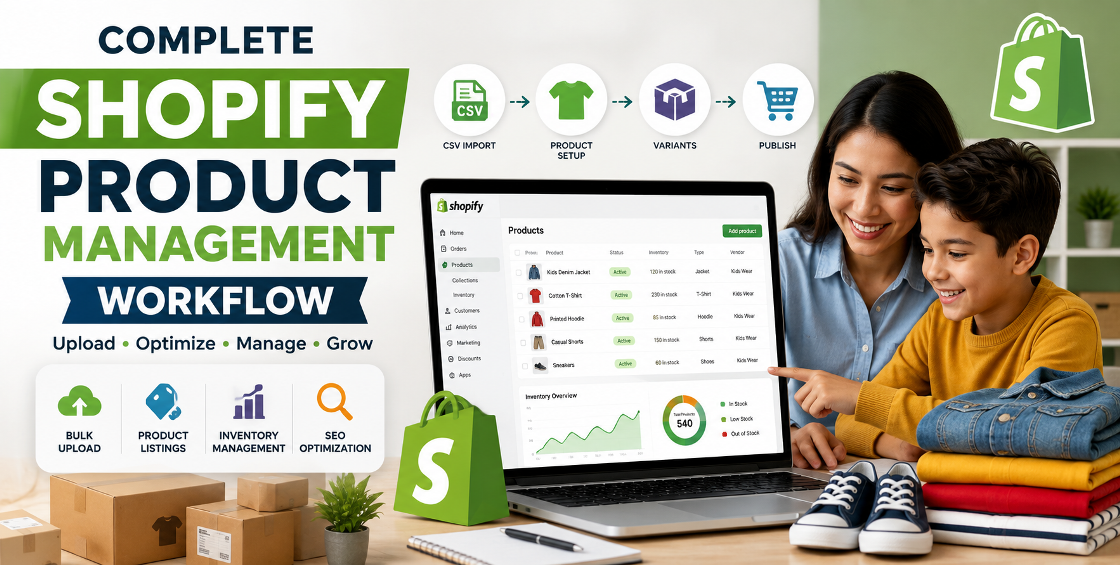
The first step was organizing product data before importing anything.
We reviewed supplier spreadsheets and found common issues such as:
Cleaning the CSV before upload prevented hours of troubleshooting later.
One of the most overlooked realities of Shopify bulk imports is that a single formatting error can interrupt hundreds of products or create duplicate listings. Investing time in data validation always saves time during migration.
Rather than importing products exactly as suppliers provided them, we restructured the catalog around how customers actually shop.
That included:
Instead of inconsistent naming conventions, titles followed a predictable format that improved both search visibility and user experience.
Collections were reorganized using automated conditions wherever possible.
This reduced manual work whenever new products were imported.
Many stores struggle with variants.
We carefully reviewed:
Proper variant setup dramatically improved customer navigation while simplifying inventory management.
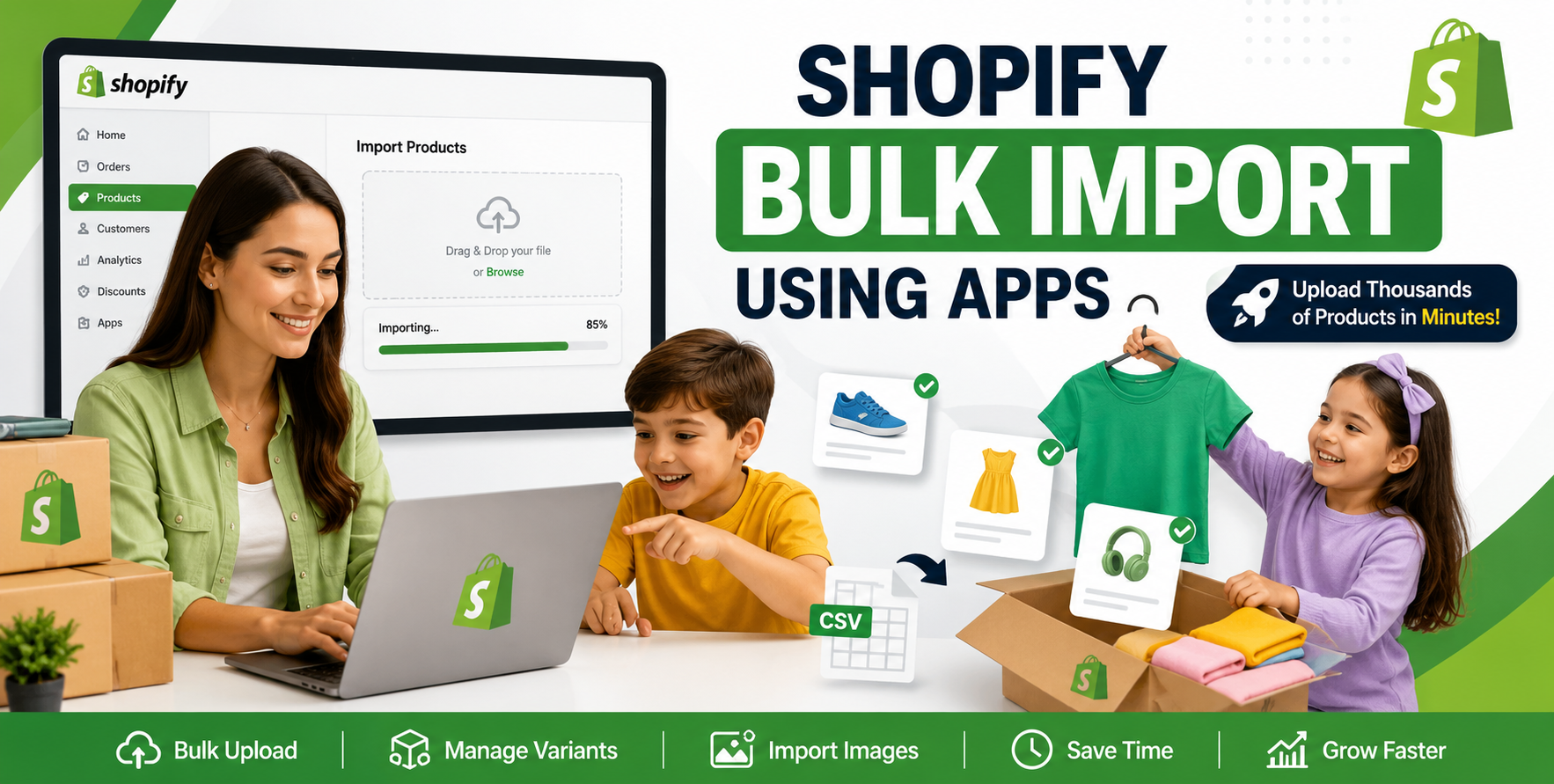
As the catalog expanded, manual uploads became unrealistic.
We implemented a repeatable bulk upload process that included:
These improvements reduced import errors significantly and allowed new inventory to go live much faster.
Many businesses focus only on adding more products.
We focused on making every product easier for search engines to understand.
This included:
Titles were rewritten naturally using relevant search phrases without keyword stuffing.
Missing meta titles and descriptions were added across the catalog.
Duplicate handles were eliminated to avoid unnecessary redirects.
Alt text was added consistently across products.
Collections and related products were connected logically, helping both visitors and search engines discover additional products.
Scaling is the perfect opportunity to improve SEO because every product passes through review before publication.
Growth creates pressure on daily store management.
We also streamlined several backend processes:
Inventory tracking became more reliable through standardized SKUs and organized supplier files.
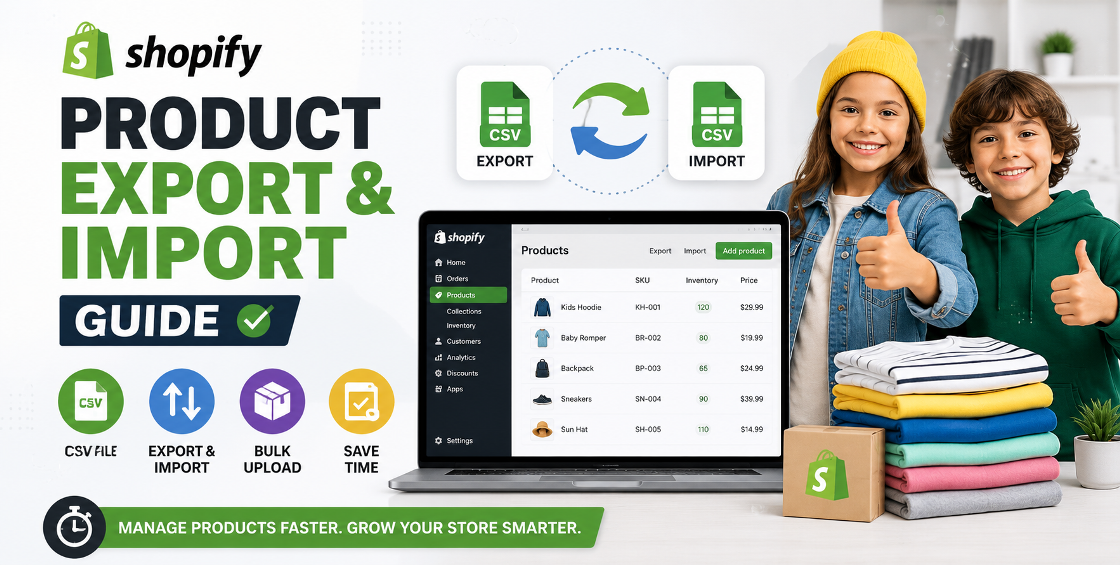
Instead of editing products individually, updates were performed using structured bulk imports.
Every upload included post-import verification to ensure:
These quality checks prevented customer-facing issues before products went live.
Within several months, the business experienced measurable improvements.
Although every store is different, the outcomes included:
Most importantly, the store became easier to manage as it continued growing.
Instead of constantly fixing backend problems, the team could focus on marketing, customer service, and business development.
After working on numerous Shopify stores, we've noticed several recurring patterns.
Supplier spreadsheets frequently contain hidden formatting issues, duplicate products, inconsistent pricing, or missing fields.
A quick review before importing can prevent hours of cleanup later.
Incorrect variant configuration often leads to customer confusion, inaccurate inventory, and abandoned purchases.
Always verify option names, SKU assignments, and image mapping before publishing.
Consistent naming conventions, tags, vendors, and product types make future automation much easier.
The earlier you establish standards, the easier it becomes to scale.
Even experienced Shopify teams perform test imports before uploading thousands of products.
Testing a smaller batch helps identify formatting problems before they affect the entire catalog.
Growing businesses often encounter the same avoidable problems.
Editing hundreds of products individually quickly becomes inefficient.
Even one misplaced column or formatting error can create unnecessary cleanup work.
Without automated collections, product management becomes increasingly time-consuming.
Duplicate URLs create SEO issues and confuse store management.
Different formatting across titles, descriptions, and tags weakens both customer experience and search performance.
To help visitors explore related services, consider linking this article to pages covering:
These service pages naturally complement the topics discussed in this case study.
Scaling a Shopify store isn't simply about adding more products or increasing advertising budgets.
Long-term growth depends on organized product data, reliable import processes, optimized store structure, and consistent backend management.
When those systems work together, your Shopify store becomes easier to manage, performs better in search engines, and delivers a smoother shopping experience for customers.
Whether you're preparing to expand your catalog, migrate suppliers, or streamline operations, investing in scalable store management today can save countless hours and position your business for sustainable growth.

Our Trusted Clients
















Our goal is to help our companies maintain achieve best class positions their respective industries & our team works occur that pleasures have to be repudiated.

Copyright © MyShopifyExpert . All rights reserved.