



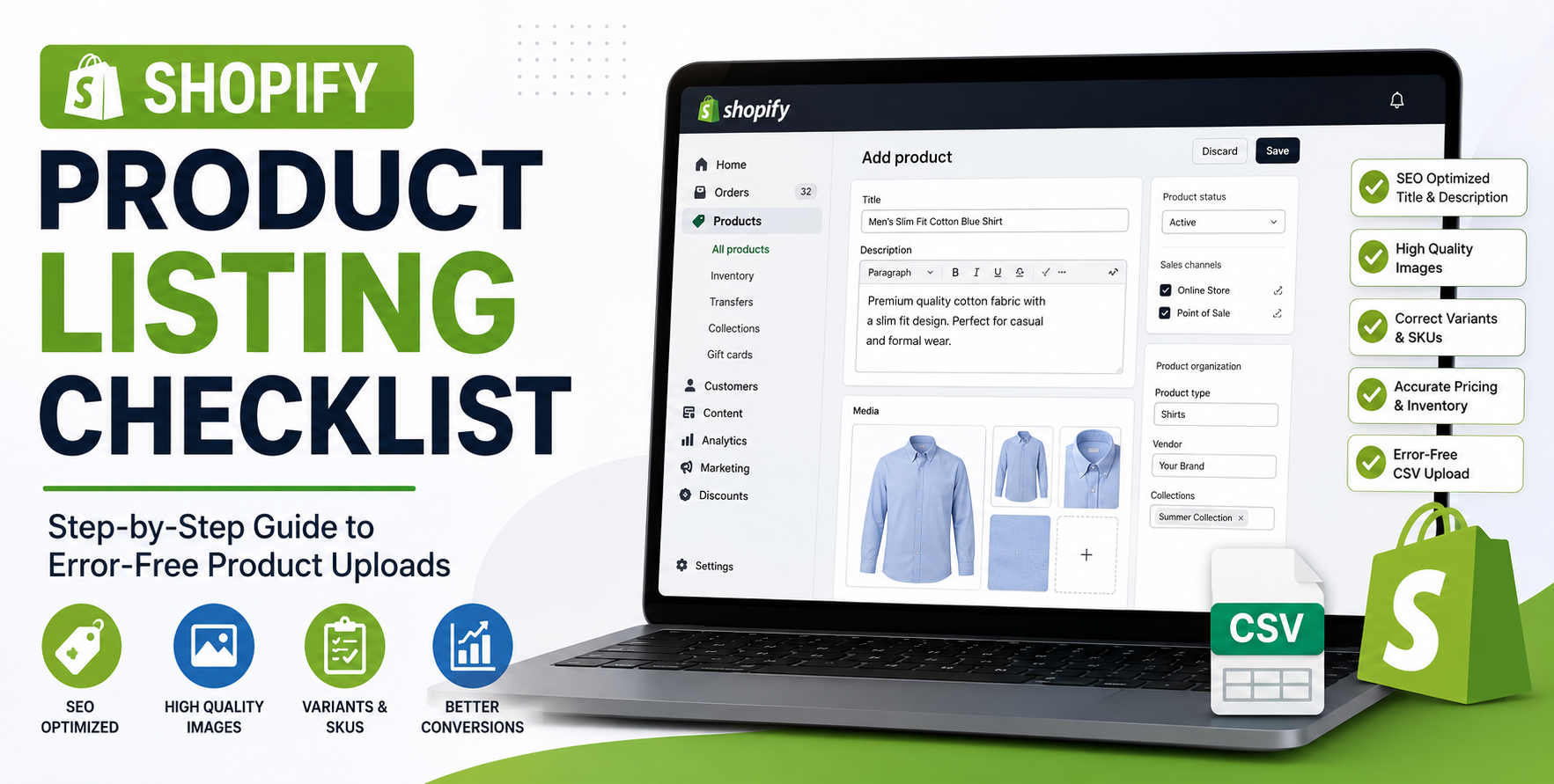
A Shopify store doesn’t fail because of bad products—it fails because of inconsistent product data.
Here’s what we typically see during audits:
Each of these issues doesn’t look serious individually. But combined, they destroy conversion rates and create customer service nightmares.
A proper checklist ensures every product is not just uploaded—but actually sellable.
Your product title is not just a label—it’s your first SEO signal.
A strong Shopify title should include:
Example:
Instead of “Blue Shirt,” use:
“Men’s Slim Fit Cotton Blue Shirt – Lightweight Casual Wear”
We’ve seen stores increase organic traffic just by restructuring titles consistently across collections.
Most Shopify stores either:
Both hurt conversions.
A strong description should include:
Practical insight:
We often see better conversion rates when descriptions are structured in scannable blocks rather than long paragraphs. Shopify themes reward clarity more than creativity here.
This is one of the most overlooked parts of a Shopify product listing checklist.
Common mistakes:
What works in real stores:
This is where Shopify stores usually break during scaling.
If you are managing:
Then your SKU structure must be consistent.
Bad example:
Good example:
We’ve seen entire warehouses mis-ship products due to inconsistent SKU formatting during bulk imports.
Shopify gives you SEO fields for a reason—but most stores leave them untouched.
Make sure you optimize:
When done correctly, this improves:
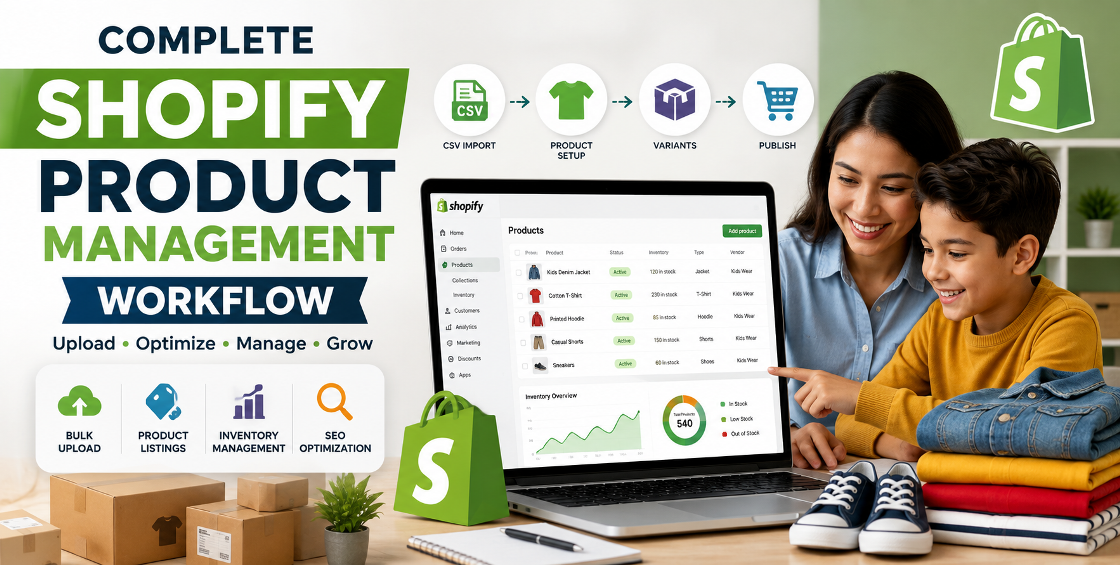
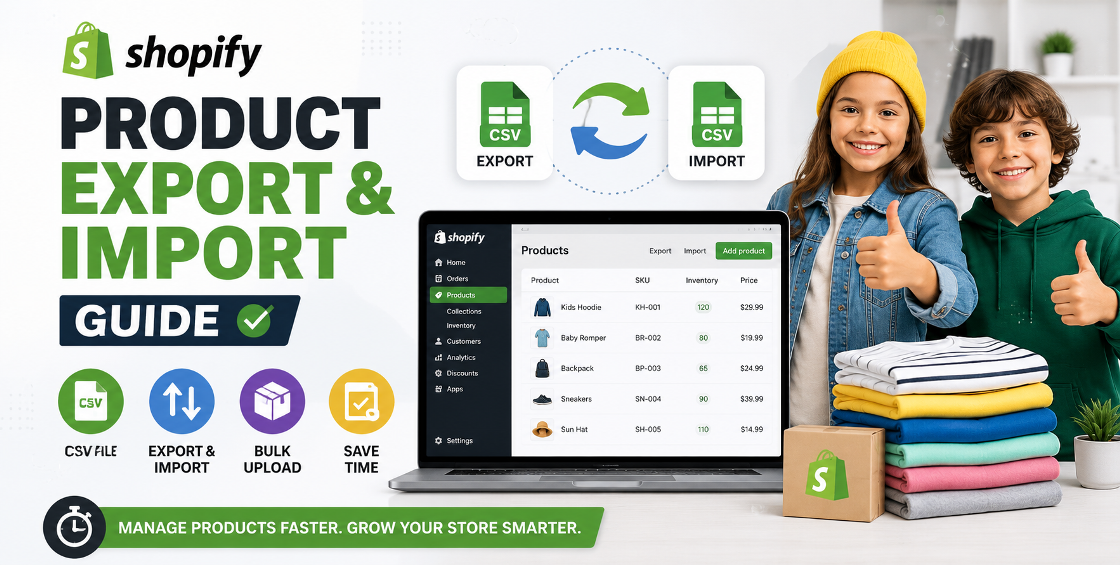
Bulk uploading products via CSV is where things get messy fast.
Common Shopify CSV product import errors include:
Real-world tip:
Always test with 5–10 products before uploading a full catalog. It saves hours of cleanup.
Also, keep a backup of your original CSV before every import. Shopify does not “undo” bulk mistakes cleanly.
Before hitting “publish,” check:
This is where most agencies quietly prevent expensive mistakes.
After working with multiple high-volume Shopify stores, here’s what consistently improves performance:
One overlooked insight:
Stores that maintain clean product data structures scale 2–3x faster during seasonal campaigns because they don’t waste time fixing catalog issues mid-launch.
These mistakes don’t always break the store—but they silently reduce revenue.
A Shopify store is only as strong as its product data. You can have great branding, ads, and traffic—but if your listings are inconsistent or incomplete, conversions will always suffer.
This Shopify product listing checklist is not just about uploading products—it’s about building a scalable foundation that supports growth, advertising, and SEO.
If your catalog is becoming harder to manage, it’s usually not a traffic problem—it’s a structure problem.
If you’re scaling a Shopify store and your product uploads are becoming harder to manage, a structured listing system can save you a lot of backend chaos.
Our team helps brands streamline Shopify product uploads, fix CSV issues, and build scalable catalog structures that actually support growth.
You can explore our Shopify product upload and catalog management services to see how we can help clean up your store structure.

Our Trusted Clients
















Our goal is to help our companies maintain achieve best class positions their respective industries & our team works occur that pleasures have to be repudiated.

Copyright © MyShopifyExpert . All rights reserved.