



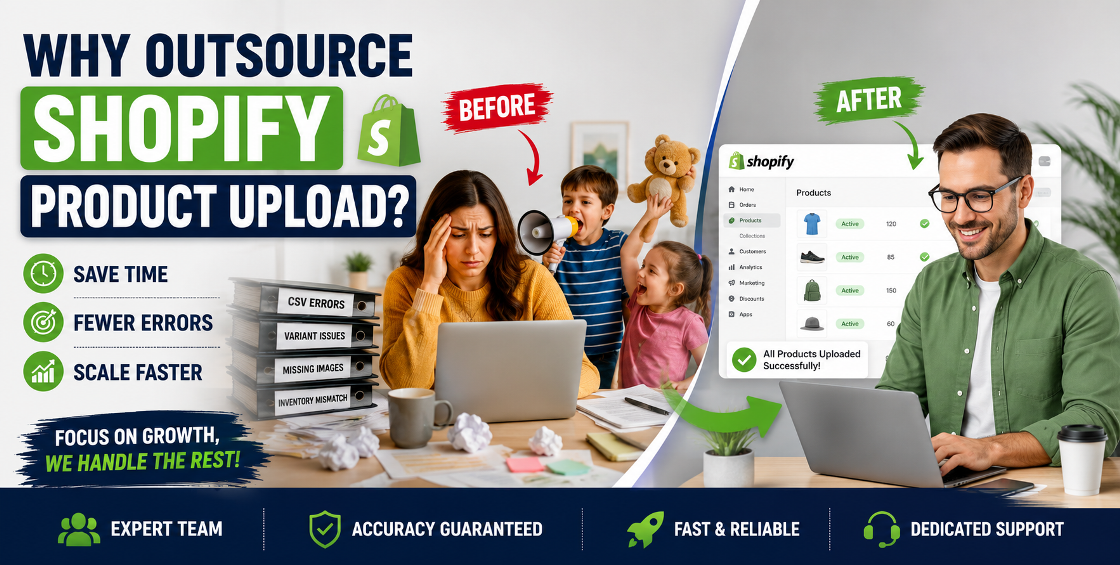
If you've ever launched a Shopify store or managed a growing ecommerce catalog, you already know that product uploads are far more complicated than they seem.
Adding a few products manually is easy. Managing hundreds—or thousands—of SKUs with multiple variants, images, collections, tags, pricing rules, inventory settings, and SEO fields is a completely different challenge.
Many store owners start by handling product uploads themselves. Eventually, they realize they're spending hours fixing CSV errors, checking variant configurations, optimizing product pages, and troubleshooting inventory mismatches instead of focusing on marketing, sales, and business growth.
This is exactly why more ecommerce brands choose to outsource Shopify product upload tasks to experienced specialists.
In this guide, we'll explain why outsourcing product uploads makes business sense, what benefits you can expect, and how it helps Shopify stores scale more efficiently.
At first glance, uploading products appears to be a simple data-entry task.
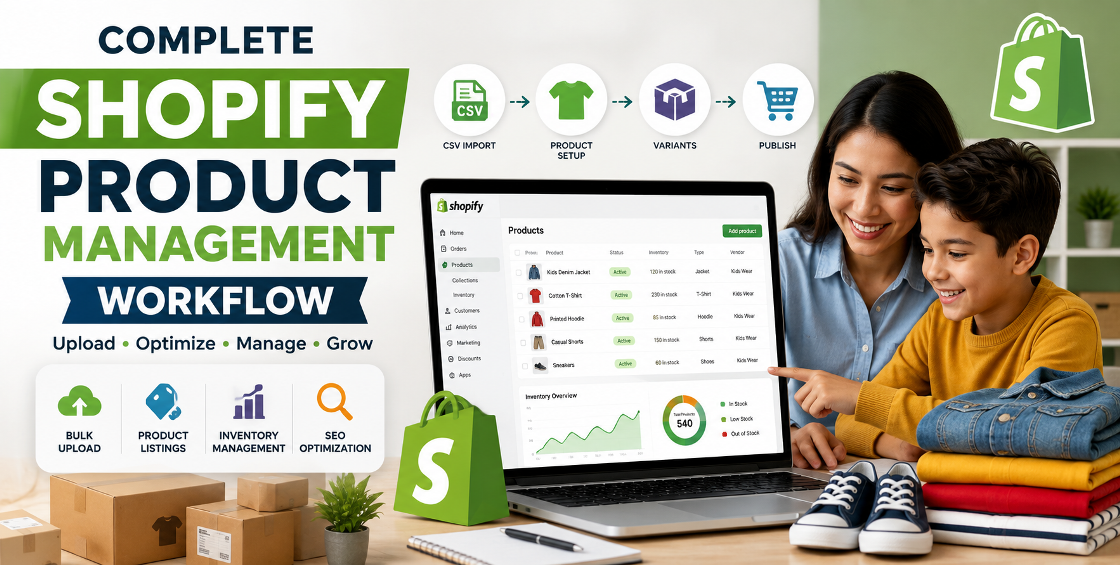
In reality, every product listing involves multiple moving parts:
A single mistake can create problems across your entire catalog.
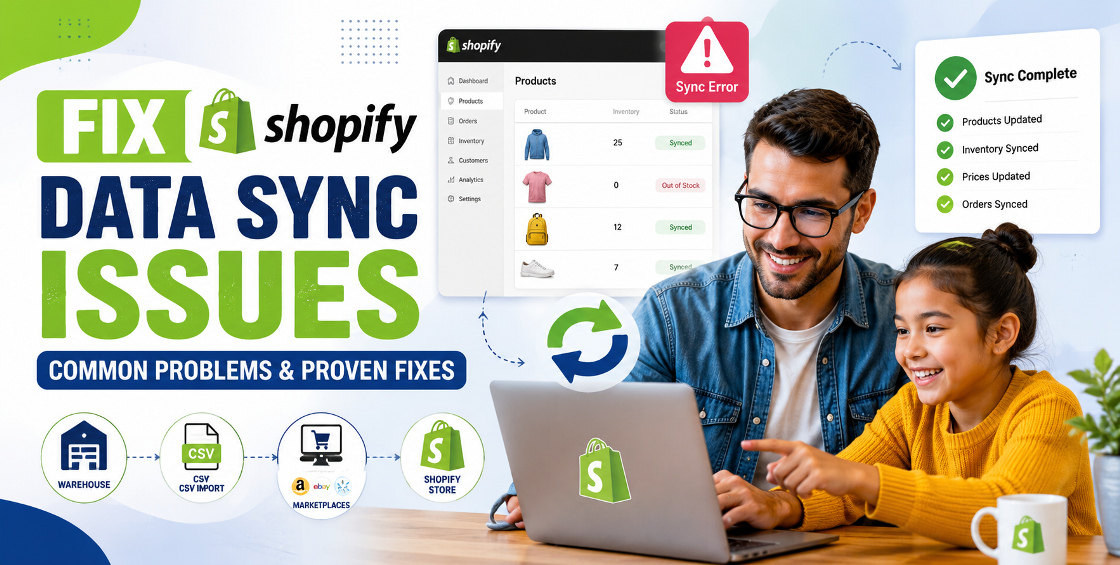
For example, we've seen stores accidentally upload variant data incorrectly, resulting in inventory syncing issues across hundreds of products. Others discover that image URLs fail during bulk imports, leaving dozens of products without photos.
These small errors can negatively impact customer experience and sales.
Time is one of the most expensive resources in ecommerce.
Store owners often spend time:
When your product catalog grows, these tasks can consume entire workdays.
By outsourcing Shopify product upload services, you free up time to focus on:
Instead of becoming a data-entry manager, you can focus on growing revenue.
Product upload mistakes are surprisingly common.
Typical issues include:
An experienced Shopify specialist follows structured quality-control processes to minimize these risks.
The result is a cleaner, more professional store that customers can navigate with confidence.
Launching a new product line often requires uploading hundreds or thousands of products within tight deadlines.
Experienced Shopify upload teams understand:
They can complete large uploads significantly faster than internal teams that lack specialized experience.
This speed becomes especially valuable during:
Many business owners assume outsourcing is only about saving time.
The bigger benefit is often improved product quality.
Well-structured catalogs help customers find products quickly.
Specialists can:
This enhances user experience and navigation.
A product page isn't just for customers—it's also for search engines.
Professional Shopify upload teams often optimize:
These improvements help products gain visibility in organic search results.
For stores with hundreds of products, the SEO impact can be substantial.
Consistency matters.
When product information is entered by multiple team members over time, catalogs often become inconsistent.
You may find:
A dedicated Shopify product upload service creates uniformity across the entire catalog.
That consistency strengthens your brand image and improves trust.
As stores grow, product management becomes increasingly complex.
Adding:
creates additional workload.
Outsourcing allows businesses to scale without continuously hiring and training internal staff.
One of the busiest periods for any ecommerce business is platform migration.
Whether you're moving from:
Data accuracy becomes critical.
Experienced Shopify upload professionals can manage:
This reduces migration risks and speeds up launch timelines.
Global ecommerce requires additional product management work.
Outsourcing helps businesses maintain accuracy across multiple markets without overwhelming internal teams.
A single formatting issue can break an entire import.
Common problems include:
Many store owners spend hours troubleshooting issues that experienced specialists can resolve in minutes.
Variant-heavy catalogs often create challenges.
Examples include:
Incorrect variant setup can confuse customers and create inventory issues.
A skilled upload team ensures variants are configured properly from the start.
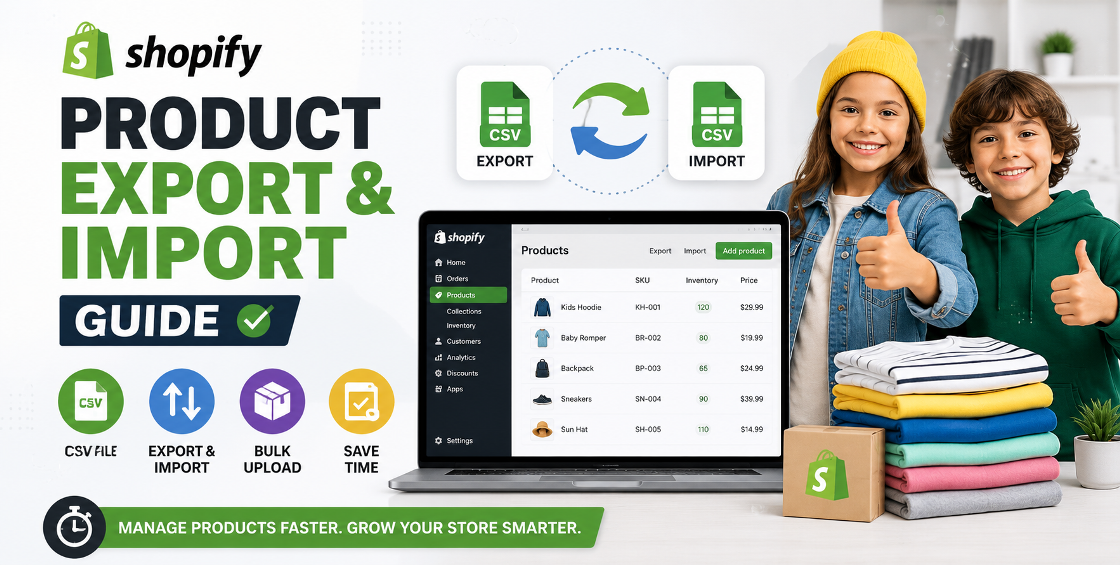
Supplier spreadsheets rarely arrive in Shopify-ready format.
Many require:
Professional upload services typically handle this preparation before importing products.
Uploading products without validation often creates large-scale errors.
Always verify:
before publishing.
Many stores leave meta titles and descriptions blank.
This represents a missed opportunity for organic traffic growth.
Different naming conventions create confusion for both customers and internal teams.
Consistency should be maintained across:
What appears to be a two-hour task can easily become a two-day project when handling hundreds of products.
This is one reason outsourcing becomes highly cost-effective.
For most growing ecommerce businesses, the answer is yes.
Outsourcing provides:
Most importantly, it allows business owners and internal teams to focus on revenue-generating activities rather than repetitive administrative tasks.
Whether you're managing 100 products or 100,000, a properly organized Shopify catalog can directly influence customer experience, search visibility, and conversion rates.
Product uploads may seem like a simple backend task, but they play a major role in the success of an ecommerce store.
Accurate listings, organized collections, optimized product pages, and properly configured variants all contribute to a better shopping experience and stronger sales performance.
When you outsource Shopify product upload services to experienced professionals, you gain efficiency, accuracy, scalability, and peace of mind.
Instead of spending valuable hours managing spreadsheets and fixing import errors, you can focus on growing your brand and serving your customers.

Our Trusted Clients
















Our goal is to help our companies maintain achieve best class positions their respective industries & our team works occur that pleasures have to be repudiated.

Copyright © MyShopifyExpert . All rights reserved.